Conservation
Approach

Conservation Principles & Approach.

Drie Valleyen Assets Conservation Approach

Restore From The Soil Up.

Healthy ecosystems begin with healthy soil. We focus on reviving microbial life, fungal networks, and soil structure to reestablish the foundation needed for veld recovery. Every decision is evaluated for its ability to regenerate soil integrity.  Without this foundation no ecological system can thrive.

Drie Valleyen Assets Conservation Approach (6)

Ecological Priorities Guide Human Action.

Land-use decisions are made with ecological health as the top priority. If a choice benefits human comfort but compromises the integrity of the system, it is reconsidered. The trajectory of the ecosystem determines our interventions—not the other way around.

Drie Valleyen Assets Conservation Approach (2)

We Are Stewards, Not Owners.

At Drie Valleyen and Rondebosch our approach is rooted in ecological stewardship rather than ownership.  The Reserve is managed with the long-term goal of regenerating and protecting its natural systems, with the understanding that meaningful ecological recovery extends beyond a single generation.

Drie Valleyen Assets Conservation Approach (3)

Corridor Creation.

Drie Valleyen and Rondebosch are part of a broader ecological network within the Garden Route, and we work together with SANParks and neighbouring reserves to support habitat connectivity and regional biodiversity. Through corridor building we aim to contribute to the resilience of this larger landscape.

Drie Valleyen Assets Conservation Approach (4)

The Land Ethic.

Our work is shaped by a practical land ethic inspired by Aldo Leopold that values the ecological function and integrity of the land beyond short-term utility. The focus remains on supporting processes that allow natural systems to regain structure, resilience, and autonomy.

Drie Valleyen Assets Conservation Approach (5)

Mimic Nature.

When the land is functioning well its systems are self-sustaining and its native species and processes are reestablishing themselves. Our role is to support these conditions, not to impose control, but to work in alignment with what the land is already capable of doing.

How We Implement These Principles.
drie-valleyen-sec-2-conservation-5

Invasive Species Clearing

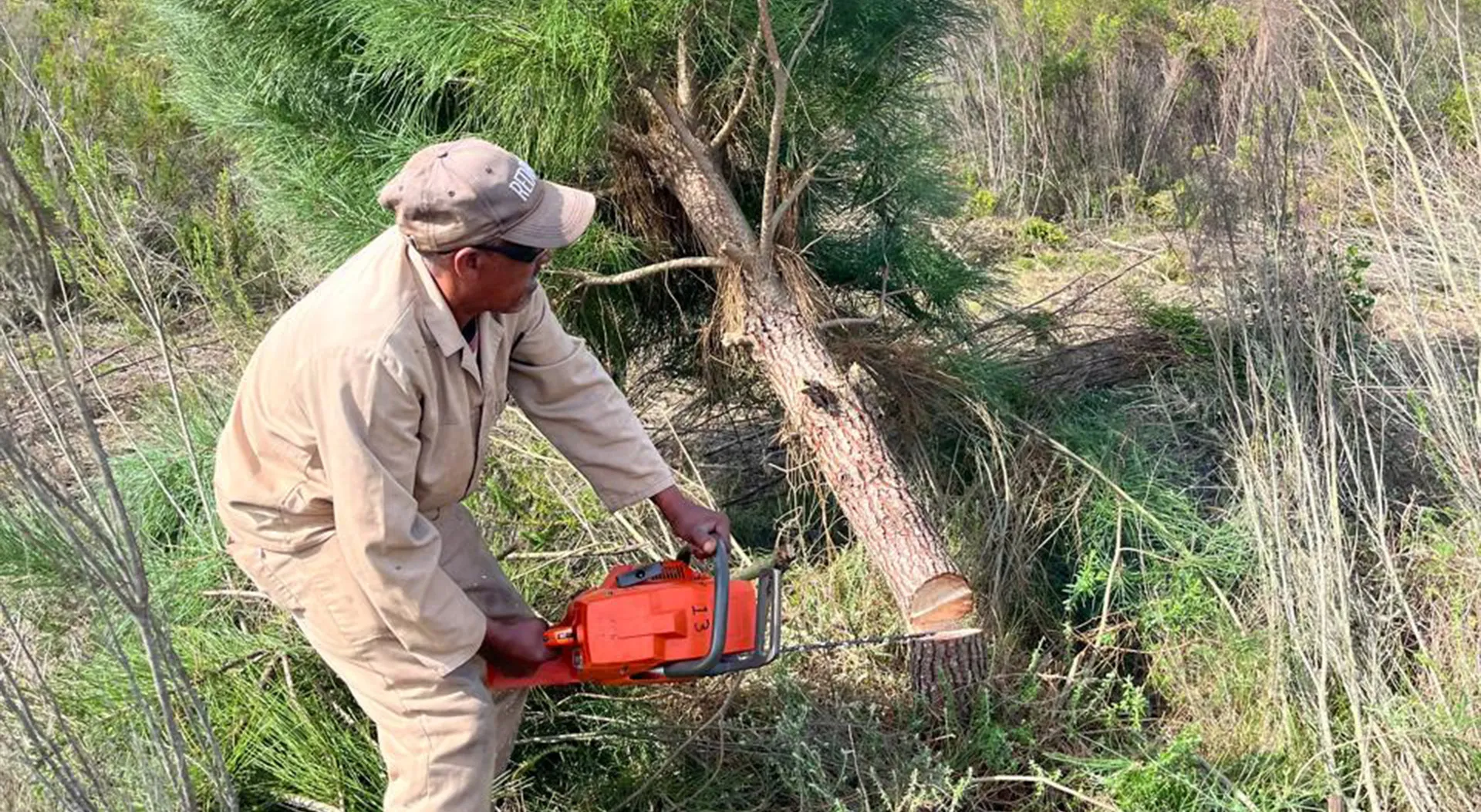
One of the first steps in restoring ecological function is the removal of invasive plant species that degrade soil health, displace indigenous vegetation, and disrupt natural fire and water cycles. Many invasive species alter the landscape in ways that reduce biodiversity, increase water consumption and fire risk, and prevent native ecosystems from regenerating naturally.

Clearing these species creates the conditions for both passive and active rewilding. Passive rewilding allows indigenous plants and ecological processes to recover naturally from existing seed banks and surrounding habitats. Active rewilding complements this process through the selective reintroduction of key indigenous species that may no longer be present but are essential for restoring ecological balance.

Together, these approaches help rebuild the complex web of relationships between plants, animals, microorganisms, and soil life, gradually restoring the biodiversity, resilience, and ecological integrity of the original landscape.

Drie Valleyen Asset Plus
drie-valleyen-sec-2-conservation-2

⁠Soil Regeneration.

Drie Valleyen and Rondebosch follow a practical model of land restoration that begins with the soil. Rather than imposing top-down management, our approach supports the gradual reassembly of ecological processes from the ground up, focusing on the recovery of key functional relationships that once sustained the landscape.

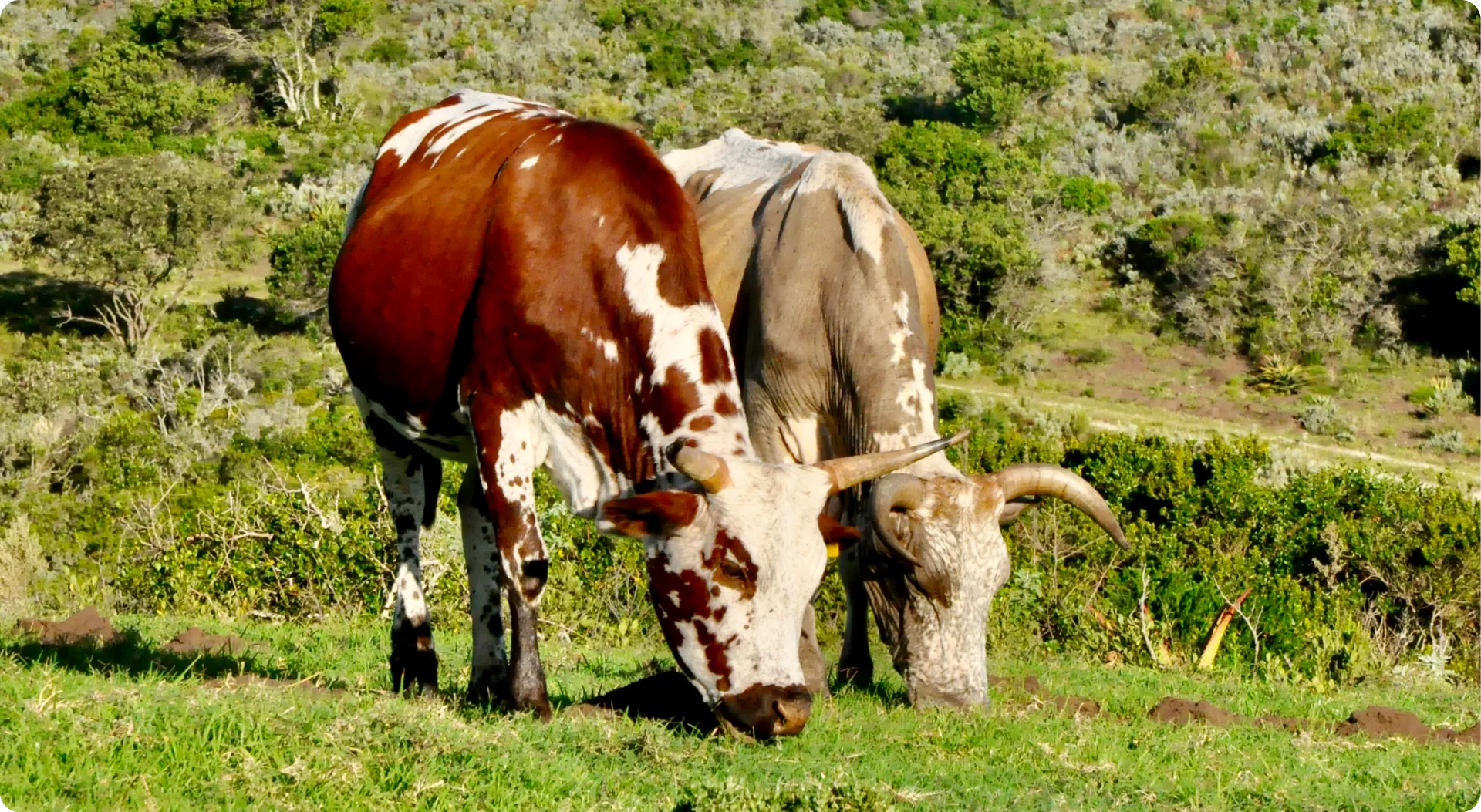
Central to this process is the introduction of Nguni cattle as ecological surrogates for the Cape buffalo, the large herbivores that historically played a vital role in the region's ecosystems. Through their grazing, browsing and trampling, these unique hardy African cattle stimulate plant growth, mulch vegetation, and return organic matter and nutrients to the soil in the form of dung.

This, in turn, supports the activity of the flightless dung beetle, which buries and distributes the dung underground. As the dung and plant material decompose, they provide nutrients and microbes for a diverse community of soil organisms, including fungi, bacteria, and other microorganisms. Fungal networks connecting roots form a vast underground web between plants that exchange information, break down organic matter, recycle nutrients, improve soil structure, and help plants access water and minerals.

By restoring this ancient relationship between large herbivores, dung beetles, soil fungi, and vegetation, we help reactivate the natural cycles that build fertile soil and sustain biodiversity. These interconnected processes create a self-reinforcing system in which nutrients are continuously recycled, soil health improves, vegetation becomes more resilient, and the landscape gradually regains its ecological function.

Drie Valleyen Asset Plus
drie-valleyen-sec-2-conservation-3

⁠Focus On Pollinators.

Pollinators—particularly bees, butterflies, beetles, moths  and other insects—are among the most important elements of ecosystem health. Their presence reflects the availability of diverse flowering plants, healthy soils, and functioning ecological relationships.

By restoring indigenous flowering plant diversity, we are creating stable habitats that provide food, shelter, and breeding opportunities for a wide range of pollinator species throughout the year. In turn, these pollinators enable the reproduction of many plant species, supporting seed production, genetic diversity, and the regeneration of natural vegetation.

To actively support this process, Drie Valleyen maintains a small number of Cape honey bee hives across the landscape. These hives help strengthen local pollinator populations while providing an additional measure of ecosystem health.  We are constructing a natural log hive for study purposes.   Research into single bee habitat and shelter preferences is ongoing as well as pollinator passive water harvesting points.

Drie Valleyen Asset Plus
drie-valleyen-sec-2-conservation-n-2

Biodiversity Corridors.

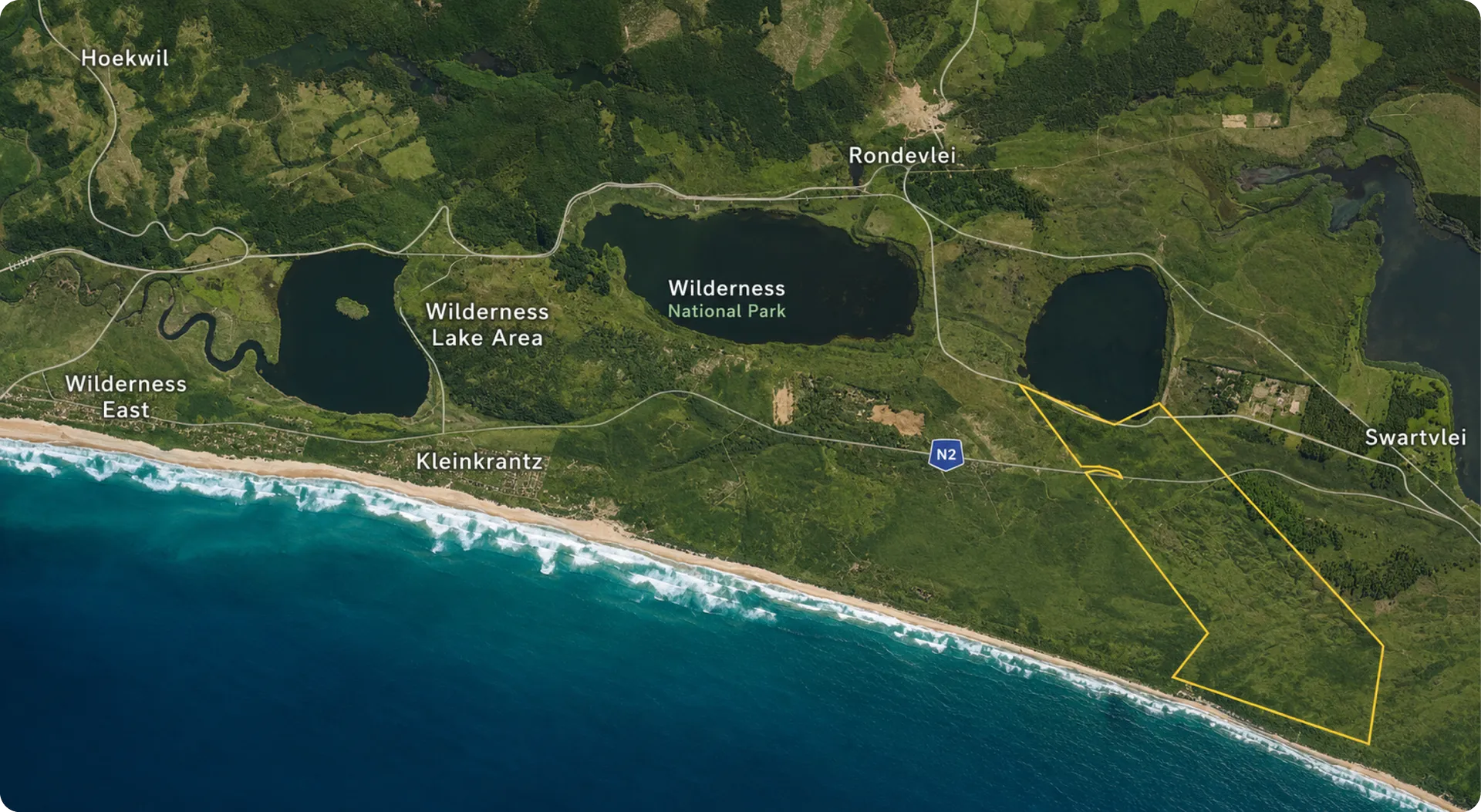
Drie Valleyen and Rondebosch are part of a growing landscape-scale effort to reconnect fragmented ecosystems along South Africa's Garden Route. Together we manage a contiguous 350-hectare conservation landscape stretching from the Indian Ocean to the SANParks Rondevlei Section of the Garden Route National Park.

Working alongside SANParks and neighbouring landowners, we seek to actively expand this conservation footprint to the Outeniqua Mountains, contributing to a larger connected landscape that will support biodiversity for generations to come.

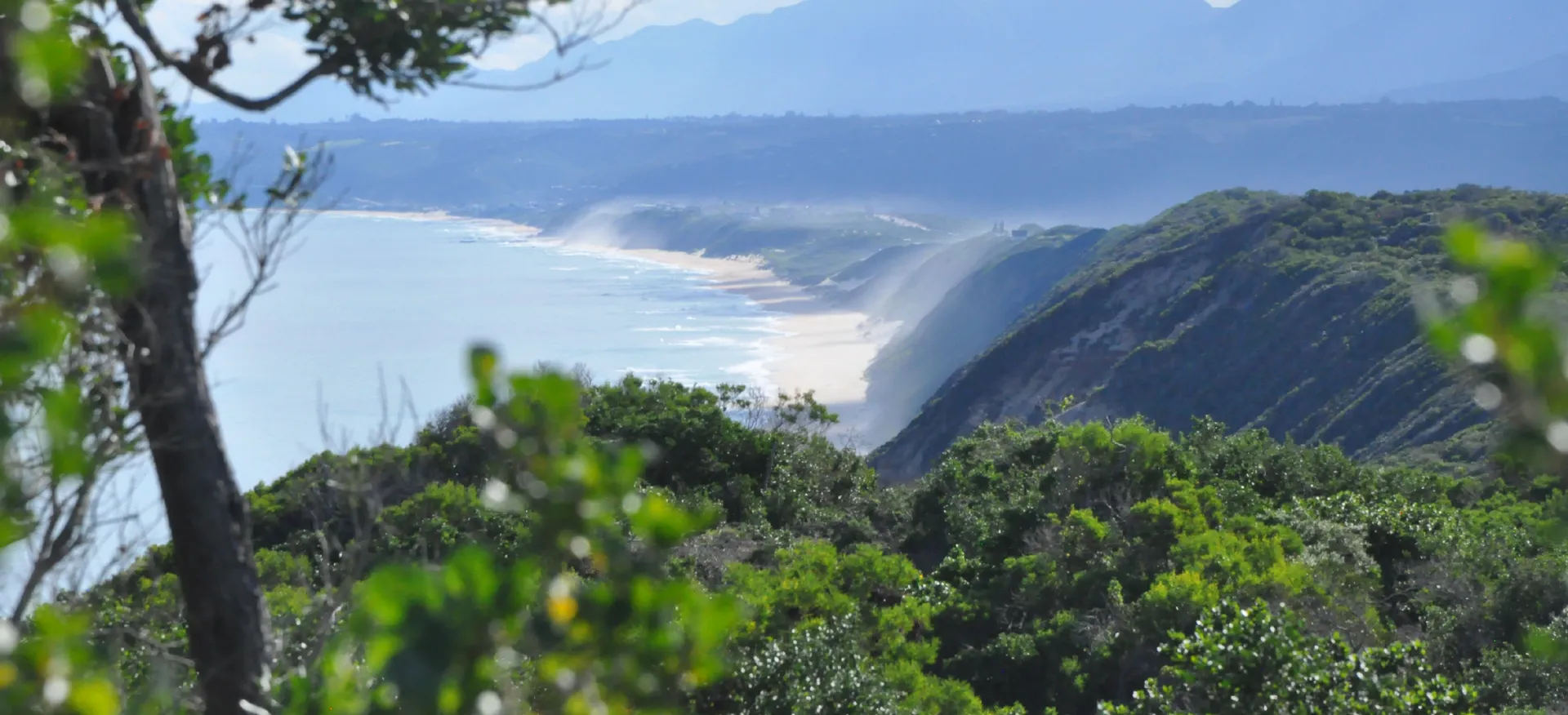
This mountain-to-ocean connection will provide an important ecological corridor for the movement of wildlife, pollinators, and plant species, while strengthening ecosystem resilience across the region.

Drie Valleyen Asset Plus
drie-valleyen-sec-4-conservation